




Kayaking the River Severn: A Lesson in Communication, Trust, and Teamwork
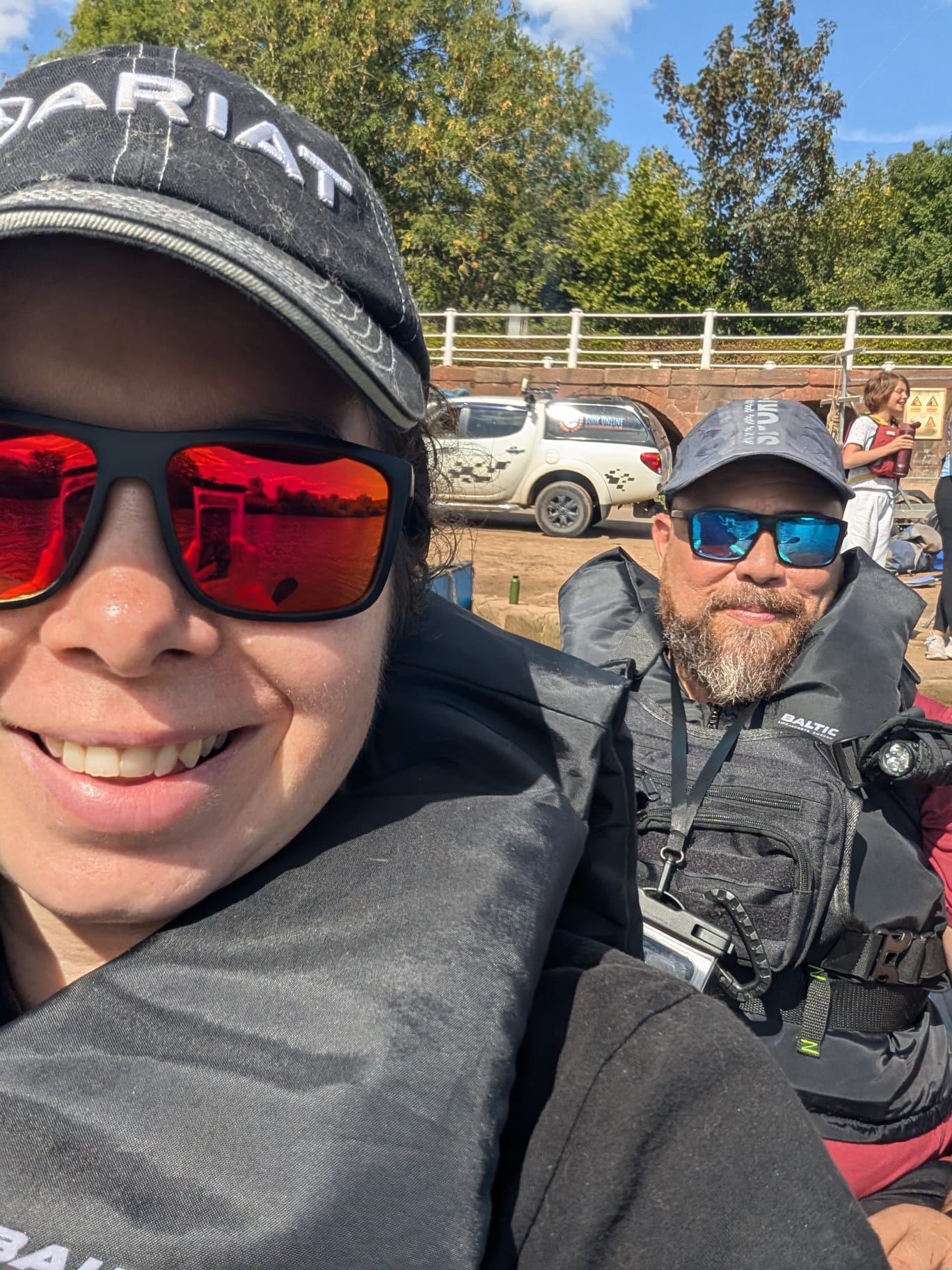
Two days ago, Amy and I decided to do something we had never done together before: kayak down the River Severn in an inflatable two‑seater.
We’ve been planning something like this for the best part of 2 years now. We’ve been to lochs in Scotland, Canals here in the Midlands, and even travelled to Cumbria to attempt a fast-flowing river before, but decided not to because of safety conditions. This was different though; we both knew the river from the margins, having done long walks and hikes alongside it, and watching it from bridges, but being in it was a completely different world.


We launched at Arley, a perfect quiet spot with easy access to the water, and planned to finish in Bewdley. Just a short drive of about 11min, so we planned for the river trip to be a little longer than that. What we didn’t plan for were the moments that would test our communication, our patience, and our ability to work as a team.
The river gave us everything: calm stretches, gentle rapids, sections of white water, shallow areas, and even a rock roll that trapped us long enough to force us into problem‑solving mode.
And somewhere between the calm and the chaos, we realised: this trip was a masterclass in communication.
And here are some of the lessons we learnt.
1. Define Roles Before You Launch
That is one lesson we learned after we launched, but we’re of course more than happy to put it into action for the next adventure. As we started to encounter obstacles along the way, we both fell into natural roles. Amy became the navigator: spotting rocks, shallow patches, and changes in the water. I became the steerer: adjusting direction, speed, and angle based on her calls.
This simple decision prevented confusion. No overlapping responsibilities. No “Who’s doing what?” moments.
Relationship parallel: Clear roles don’t limit a couple (or a team); they free you. When each person knows their part, their strengths and weaknesses, you move forward with confidence instead of stepping on each other’s toes.
Of course, there is also the “accepting the role” part, which is where the drama usually resides. And I say this because not everyone really likes the role they are assigned. Not everyone falls straight into their strengths or accepts their weaknesses.
In our relationship, Amy is usually the planner or the strategist. I am the enforcer. But of course we don’t always see eye to eye on that. Amy sometimes doesn’t like that she is “the one that thinks about everything”, and I don’t particularly enjoy being “the one that makes things happen”.
That’s not to say that roles can’t be interchangeable, especially if you have the skills necessary to take the task at hand forward. But we do need to learn to lean on our strengths.
2. Calm Water Is Where You Practise Communication

In the calm stretches, we found our rhythm. Amy would call out, “Left side looks clearer,” or “Shallow ahead,” and I’d adjust smoothly.
These moments were easy, but they mattered. They built trust. This is where we built the foundation for what we knew was to come downstream.
Relationship parallel: You practise communication in peaceful seasons so you’re ready when life gets turbulent. Calm periods aren’t boring; they’re training grounds.
The white rapids will come at some point. Take the downtime to enjoy the scenery. Rocking the boat for the sake of it, because you’re bored of the calm, might send ripples in the water that mean you might not see the current changing and taking hold of the boat.
3. Rapids Reveal Your Communication Gaps
When the river sped up, everything became louder — the water, the wind, the urgency.
Suddenly, timing mattered. Tone mattered. Clarity mattered.
A delayed call meant hitting a rock. A vague instruction meant drifting off course. And every good call came with the celebration it deserved.
A wrong choice meant losing our kiln or getting stuck between a rock and a hard place… And it could probably mean the difference between being dry or soaking wet.
Relationship parallel: Stress amplifies everything. If communication isn’t clear and at the right time, small issues become collisions. Rapids don’t create problems: they expose them. Being ready for them can mean the difference between failure or celebration.
4. When You’re Stuck, You Solve It Together
The rock roll obstacle was the first test. The kayak got wedged, the current pushed us sideways, and for a moment we were stuck in a loop.
We had 2 choices: One meant I’d be jumping out in the current and pulling the kayak out of the rocks we were wedged on. The other required we both work together and coordinate using the paddles and some strategic shuffle to make us drop in the right place.
Thank goodness we went with option two. The weather was nice, but I didn’t really fancy a dip on the Severn that day.
We couldn’t brute‑force our way out. We had to talk. We had to listen. We had to coordinate.
Eventually, we got out — not because one of us was strong enough, but because both of us were aligned.
Relationship parallel: When you’re stuck in a cycle — an argument, a misunderstanding, a repeating pattern — you don’t escape by pushing harder. You escape by aligning your efforts.
5. Sometimes You Have to Get Out and Carry the Boat


At one shallow section, the kayak simply wouldn’t move. We tried paddling harder. We tried shifting weight. Nothing worked. Turns out we chose the wrong direction going on a fork in the river.
I saw it as we made the mistake. But by then it was too late.
The solution: we got out, much to Amy’s discomfort, lifted the kayak, and carried it to deeper water.
It wasn’t glamorous, but it worked.
Relationship parallel: Some problems won’t move no matter how hard you “paddle.” Sometimes you need to step out of the moment, change perspective, and restart from a better place.
Sometimes the better place is not the most comfortable one. And sometimes you gotta get your feet wet. But it is better than sitting dry in a boat that won’t move.
6. Communication Is Not About Volume — It’s About Clarity
There were moments where shouting wasn’t helpful. The river was loud enough.
What worked was short, clear, calm communication:
“Rock ahead.” “Go right.” “Shallow left.” “Hold steady.”
With time Amy and I worked out what worked best. Even if sometimes “Paddle off” was still confused with “Paddle the hell off” and she would start paddling fast insted of removing it from the water. We made it work.
Relationship parallel: In conflict, raising your voice doesn’t increase understanding. Clarity does. Short, honest, calm communication keeps the boat steady.
7. Trust Makes Communication Possible
Amy trusted me to steer. I trusted her to navigate (just about… Lets just say she has a habit to make us take longer routes than we could take from point A to point B).
That trust made every instruction feel like teamwork instead of criticism.
That’s why we could laugh out every obstacle and continue going.
Relationship parallel: Communication without trust feels like control. Communication with trust feels like partnership.
Closing Reflection
Kayaking the River Severn wasn’t just a fun day out, it was a living metaphor for how couples move through life:
Calm waters teach rhythm. Rapids teach timing. Obstacles teach teamwork. Shallows teach humility. And the whole journey teaches trust.
We didn’t just paddle a river. We learned how to move together.


How about you? What metaphoric river are you transponding? Can we help?
Drop us a comment!
Carpe diem!
Yuri
Leave a Reply